


Gold Miner Inc
MesibaGames
I went into Gold Miner Inc expecting a simple simulation game built around digging, collecting, and improving equipment. That is exactly the kind of loop it offers, but the important question is whether the loop remains enjoyable after the first burst of curiosity. My early impression was positive: it is easy to understand, quick to pick up, and satisfying when an upgrade noticeably improves a digging session. The more useful question, though, is how much attention it deserves once the novelty of finding hidden riches starts to fade.
Developed by MesibaGames, this free game sits in the simulation category and is suitable for everyone. Its store summary gives the basic idea—dig for gold, improve your gear, and search for valuable discoveries—but playing it made the rhythm clearer. You alternate between short efforts in the ground and decisions about how to make the next attempt more productive. That gives the game a practical sense of progress without requiring the player to learn a complicated rule set.
The game has an average rating of 4.1 from around 2.6 thousand ratings, with more than 100 thousand installs. Those figures suggest that it has found an audience among players who like uncomplicated progression rather than a demanding competitive experience. I can see why. It is the sort of title I could open while waiting for an appointment, during a short break, or when I wanted something more interactive than scrolling through a social feed.
How the digging loop feels during the first week
The first sessions are carried by clarity. I did not need a long tutorial or specialist knowledge to understand the objective. The central pleasure comes from turning a modest digging attempt into a better one through equipment improvements. That connection between work and reward is straightforward, but it gives each early session a reason to continue: I am not simply collecting resources; I am trying to make the next trip more efficient.
That simplicity is one of the strongest parts of the experience. Many simulation games bury their main idea under menus, currencies, timers, or layers of management. Gold Miner Inc keeps the fantasy focused on excavation and upgrading. For a new player, this means the first week is relatively friendly. I could make progress without studying a wiki or memorizing a complicated production chain.
Related News






The most satisfying moments came when I treated an upgrade as a planning decision instead of spending immediately. If the next improvement helps me reach valuable material more reliably, it can change the feel of a session. I recommend looking at upgrades as tools for reducing wasted effort, not merely as badges of progress. That small change in mindset makes the game feel more strategic than the store description suggests.
There is also a useful tension between immediate reward and patient progress. Spending resources as soon as they become available feels tempting, especially during the opening hours. However, holding back briefly can make a later improvement feel more meaningful. I found that players who enjoy small optimization choices will get more from the game than players who only want constant rewards.
A realistic everyday use case is a short commute or a few spare minutes before dinner. The game works well in that setting because I can return to the central task without reconstructing a large story or remembering a complicated objective. It is less suitable when I want a deep evening session with a changing narrative, detailed character development, or a large world to explore. Its first-week appeal comes from focus, not variety.
Gallery
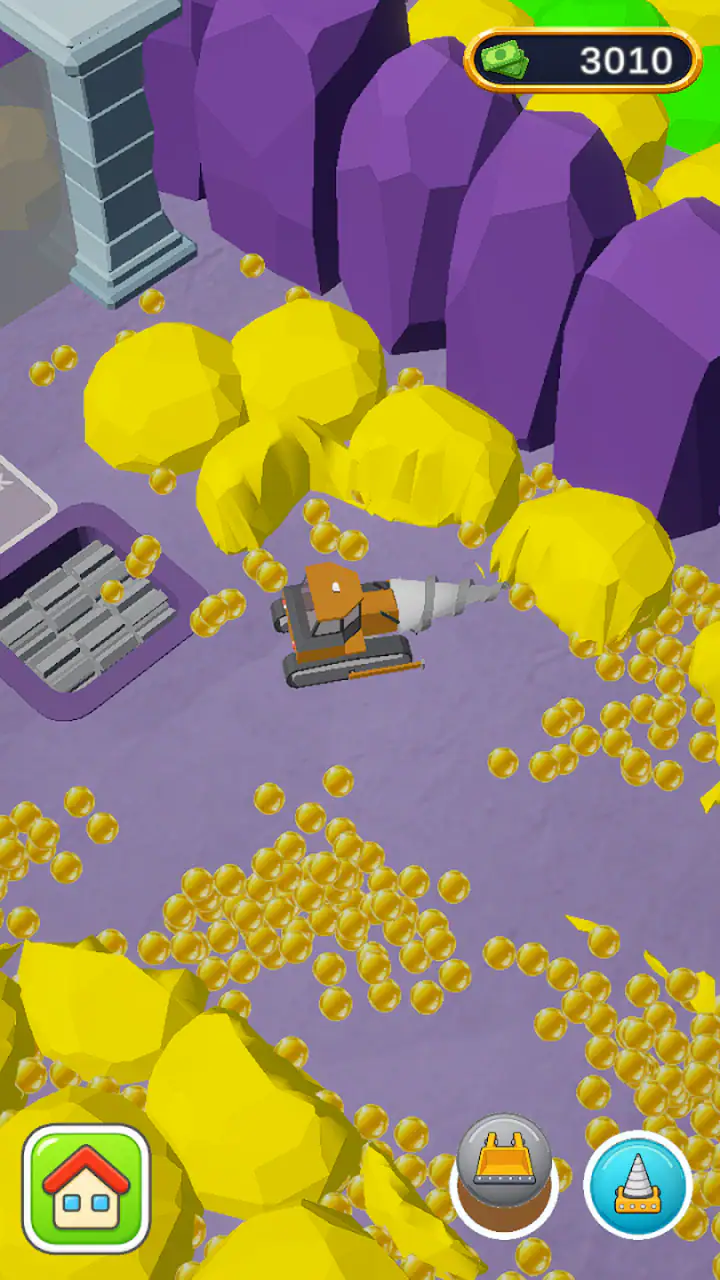
The free entry point also matters. I could try the complete basic idea without first committing money, which lowers the risk for curious players. At the same time, the presence of in-app purchases means I would advise new players not to treat every available purchase as necessary. The game is easier to judge when I first learn how much progress feels comfortable through ordinary play.
One practical tip is to avoid playing only for the biggest visible reward. A steady improvement in the equipment cycle may be more valuable than chasing an exciting but inconsistent result. This is a non-obvious strength of the design: the game can reward a calm routine. If I rush toward the most attractive outcome, the slower parts feel like obstacles; if I build a dependable rhythm, they become part of the simulation.
The current version is 1.3.4, and it runs on devices using Android 7.0 or later. That makes it accessible to people who are not using a recent phone, although the actual comfort of play will still depend on the device. For someone deciding whether to install it, the important point is that the technical entry requirement is not especially demanding, while the game itself is designed around a low barrier to understanding.
What makes the opening satisfying
The opening works because every action points toward a visible improvement. Digging supplies the reason to continue, equipment gives the player a sense of control, and the possibility of a better find keeps the next attempt interesting. I enjoyed that the fantasy is concrete: I am not managing an abstract empire or reading a long set of instructions. I am trying to make a small operation more capable.
That focus also makes the game approachable for younger players and casual users. The Everyone content rating supports that broad audience, and I would be comfortable recommending it to someone who wants gentle simulation mechanics rather than an intense action game. Adults who prefer quiet, repetitive progress may enjoy it too, especially if they like watching a basic process become more efficient.
Still, the first-week experience can create expectations that the longer game may not fully satisfy. Early upgrades arrive with enough frequency to make progress feel lively. Once those improvements become less frequent or require more repetition, the same digging routine can lose some of its sparkle. That transition is where the game’s lasting value has to prove itself.
What remains valuable after the novelty fades
After the initial excitement, Gold Miner Inc depends on whether the player enjoys incremental optimization. The core activity does not need a dramatic plot twist to remain useful, but it does need to make repeated sessions feel worthwhile. In my experience, the game has recurring value when I approach it as a light habit: complete a small round, make a considered improvement, and stop before the routine becomes tiring.
That stopping point is important. I would not recommend forcing long sessions simply because another upgrade is close. The game’s strengths are better suited to brief returns than to marathon play. When I played beyond the point where decisions felt meaningful, the digging began to feel like a task rather than a choice. The title is at its best when I leave with a clear next goal instead of exhausting the loop in one sitting.
Players who enjoy idle-style progression may compare it with games that automate more of the work. Those alternatives can be better for someone who wants rewards to accumulate with minimal interaction. Gold Miner Inc is a better fit if I want my attention to matter during the session and I like the feeling that equipment choices influence the pace of progress. The trade-off is that it asks me to return and participate rather than simply check a balance.
It also differs from deeper management simulations. A larger management game may offer staffing, logistics, market decisions, or several connected systems. That can create more long-term variety, but it also increases the mental load. Gold Miner Inc chooses a narrower fantasy. I would pick it when I want a focused mining routine, not when I want to run a detailed industrial operation.
Another comparison is with puzzle or arcade mining games, where success depends mainly on timing, reflexes, or solving a level. Those games may provide more immediate excitement and clearer win-or-lose moments. Here, the satisfaction is more gradual. Progress comes from improving the operation over time, so players looking for fast challenge may find the simulation pace too gentle.
For month-to-month use, I think the game needs a personal reason to return. One useful approach is to set a small objective for each visit, such as saving toward a particular equipment improvement or testing whether a more careful route produces better results. This prevents sessions from becoming an automatic tap-through routine. The game does not need to be played every day to be enjoyable; it benefits more from intentional returns.
The in-app purchase range is from $8.99 to $11.99 per item. That is a meaningful consideration for a free game, particularly if a player is prone to buying progress during a slow stretch. I would treat those purchases as optional conveniences rather than part of the basic recommendation. Before spending, I would first ask whether the current loop is still fun without acceleration. If the answer is no, paying to move faster is unlikely to solve the underlying fatigue.
This is also where the game’s audience divides. A patient player who likes gradual improvement can view the slower periods as part of the challenge. Someone who wants frequent new content or rapid unlocks may see the same periods as friction. Neither reaction is wrong, but it is worth recognizing before investing time or money. The game rewards tolerance for repetition more than a hunger for constant novelty.
Keeping the routine comfortable
The maintenance burden is fairly simple in concept but easy to underestimate. The player has to keep returning to the digging loop, pay attention to upgrade opportunities, and decide when continued play is no longer productive. There is no benefit in turning a relaxing simulation into a daily obligation. I found that the healthiest way to use it is as a small activity with a defined endpoint.
My preferred routine would be to open the game with one practical question: what improvement am I working toward? I would then play until I had either made meaningful progress or reached the point where the next actions felt repetitive. This approach creates a natural stopping rule. It also makes the equipment system feel more deliberate because I am connecting each session to a goal rather than reacting to every reward.
Another helpful habit is to separate curiosity from spending. When a purchase appears attractive, I would continue playing long enough to understand whether it changes the kind of decisions I make or merely shortens the wait. That distinction matters. A purchase that opens a genuinely different approach could be more interesting than one that only removes repetition, but I would still want to know whether the underlying game remains enjoyable afterward.
For families, the Everyone rating makes the game easier to consider, but I would still explain the purchase system before handing it to a child. Free installation does not mean every option inside the game is free. A simple rule—play normally first and ask before buying—can prevent an otherwise harmless simulation game from becoming an unexpected expense.
Device compatibility is another practical point. Android 7.0 is the minimum operating system, so owners of older supported phones may be able to install it. On a small or slower device, however, the experience may feel less comfortable than on a newer screen. Since the game relies on repeated visual interaction, a cramped display or inconsistent performance could make the routine more tiring even if the operating system qualifies.
Where fatigue begins and who should skip it
The main source of fatigue is repetition without a fresh decision. Digging, collecting, and improving gear form a coherent loop, but coherence alone does not guarantee long-term variety. If several sessions feel functionally identical, the player may start opening the game out of habit rather than interest. That is the point at which I would pause instead of trying to push through.
Upgrade pacing can create a second kind of tiredness. Early progress often feels generous because each improvement is easy to understand and emotionally visible. Later, the same reward may feel smaller because it is measured against a longer wait or more repeated actions. This is common in progression games, but it matters here because the entire experience is built around that cycle. When progress slows, there are fewer alternative systems to distract from the delay.
The mining theme itself may also limit replay value for some players. If I enjoy the idea of uncovering resources, the focused setting remains pleasant. If I need changing environments, story events, or a wide selection of activities, the narrow premise may begin to feel confined. A broader simulation or management title would be the better choice for someone who wants several kinds of responsibility in one game.
I would also skip it if my main goal is competitive play. This is not the title I would choose for direct matches, fast reactions, or social rivalry. Its appeal is personal progression and a calm sense of improvement. Likewise, players who dislike repeated resource gathering should be cautious. The equipment upgrades do not erase the basic activity; they make that activity more productive.
There is a subtle risk in the free-to-play structure: a slow section can make a purchase seem more appealing precisely because the player is already tired. My advice is to use fatigue as a signal to stop, not as a reason to spend. If I am no longer enjoying the digging itself, buying a shortcut may only make the remaining content arrive sooner without making it more satisfying.
The game can still work well for a specific kind of user: someone who enjoys low-pressure progress, likes seeing tools improve, and wants a simulation that can be played in short bursts. It is especially suitable for players who prefer a clear objective over a large menu of systems. The correct expectation is not endless discovery, but a compact routine that can remain pleasant when played at a sensible pace.
Small decisions that improve the experience
One of my strongest recommendations is to treat upgrades as a sequence rather than a shopping list. Consider which improvement will make ordinary sessions better, not simply which one has the most impressive description or appearance. This keeps the focus on practical efficiency and reduces the feeling that progress is random.
I would also vary the length of sessions. Short visits preserve the satisfaction of discovery, while occasional longer sessions can reveal whether the loop still holds attention. If the game only feels enjoyable when rewards arrive quickly, that is useful information about its long-term fit. A title that survives both a brief check-in and a relaxed session is more likely to earn lasting space on my device.
Finally, I would keep purchases outside the normal reward rhythm. Decide on a spending limit before playing, rather than making the decision after a frustrating run. That simple separation helps me judge Gold Miner Inc as a game first and a free-to-play product second. It also makes the eventual verdict more honest: I can tell whether I like the mining routine, not merely whether I like moving through it quickly.
My long-term verdict on keeping it installed
Gold Miner Inc earns a place on my phone for players who want a straightforward simulation built around digging and equipment progression. The first week is its strongest period because the loop is immediately readable and each improvement feels connected to the work that produced it. The game is approachable, free to start, and broad enough for casual play without demanding a large time commitment.
Its lasting value is more conditional. I would keep it installed if I enjoyed setting small goals and returning for measured progress. I would not keep opening it automatically every day if the sessions had become a sequence of identical actions. The game does not hide its central routine, so long-term enjoyment depends on whether that routine remains satisfying after the first discoveries become familiar.
The 4.1 average and audience of over 100 thousand installs make it clear that the concept has found interest, but those figures should not replace personal judgment. The right question is whether you enjoy the specific rhythm of excavation followed by improvement. If you do, the game can be a comfortable companion for spare moments. If you need constant surprises, deeper management, or competitive pressure, another simulation or a more active genre will probably serve you better.
MesibaGames has made a focused experience rather than an enormous one. That focus is both its identity and its limitation. I appreciate that I can understand the objective quickly, make a few decisions, and leave without feeling that I abandoned a complicated operation. At the same time, I would like players to approach it with realistic expectations: the game’s charm comes from refining a repeated task, not from continually reinventing it.
For me, the final recommendation is a qualified yes. Install it if you enjoy calm resource progression, short sessions, and the feeling of turning modest equipment into a more capable digging setup. Give it a fair trial without rushing into the optional purchases, and pay attention to whether the routine still feels like play after the early upgrades slow down. Its real strength is not endless novelty, but the simple satisfaction of making each excavation a little more effective.
Because it is free and rated for everyone, the entry risk is low, provided the purchase options are treated carefully. I would recommend it to a friend who wants a light mining simulation for breaks and quiet evenings. I would steer that friend elsewhere if they wanted a deep business simulator, a fast arcade challenge, or a game with enough changing content to occupy every day for months. In the right hands, Gold Miner Inc is an enjoyable small habit; it just should not be mistaken for a limitless one.
FAQs for Gold Miner Inc
What is Gold Miner Inc. and how is the gameplay structured?
Gold Miner Inc. is a casual mining and management game centered on extracting valuable resources and improving your operation. You typically collect gold and other materials, upgrade equipment, unlock more productive areas, and work toward earning greater profits. The gameplay is easy to understand, but progression gradually introduces more upgrades and strategic decisions, making it suitable for short sessions or longer play periods.
Is Gold Miner Inc. free to download and play?
Gold Miner Inc. can generally be downloaded and played without an upfront purchase, although the exact availability and monetization may depend on the Android or iOS version. Like many free-to-play games, it may include optional advertisements, in-game currency, or purchases that speed up progress. You should review the store listing and purchase settings before downloading, especially if children may use the device.
Does Gold Miner Inc. require an internet connection?
The basic mining and upgrade gameplay may be available without a constant internet connection, which is convenient when traveling or playing in areas with limited service. However, advertisements, cloud-related features, events, rewards, and purchase verification may require internet access. Because offline behavior can vary between versions and updates, it is best to test the game after installation rather than assuming every feature works without connectivity.
Are there advertisements or in-app purchases in Gold Miner Inc.?
Gold Miner Inc. may use advertisements and optional in-app purchases as part of its free-to-play model. Ads can sometimes provide extra rewards, boosts, or additional resources, while purchases may offer premium currency or faster progression. The game can still be enjoyable without spending money, but players who prefer a completely uninterrupted experience should check whether an ad-free option or purchase restrictions are available.
Is Gold Miner Inc. suitable for children and low-end devices?
Gold Miner Inc. uses straightforward controls and a casual gameplay style, so it can be approachable for younger players and beginners. Nevertheless, parents should check the listed age rating, advertising content, and in-app purchase settings before allowing children to play. Performance is usually more comfortable on recent devices, while older phones may experience slower loading, reduced visual quality, or occasional instability after updates.
Pros
- Simple controls make mining easy to learn.
- Idle earnings continue while you are away.
- Many upgrade options encourage steady progress.
- Short sessions fit well into casual play.
- Colorful visuals and effects keep the gameplay inviting.
Cons
- Progress can slow noticeably without frequent upgrades.
- Limited gameplay variety may feel repetitive over time.
- Some upgrades require considerable in-game currency.
- Ads may interrupt the experience or offer key rewards.
- Offline earnings are limited compared with active play.


